Wednesday, 26 March 2014

Laura Perry

Author: Laura Perry
Best Known Works: Ariadne’s Thread, Jaguar Sky
Where you can find her: Website / Facebook / Goodreads / Blog
Top Writing Tip: Never give up. That’s the hardest thing, especially when you get negative feedback (and believe me, we all get plenty of it). But if you keep believing in yourself, and keep working, eventually you’ll reach your goals.


Hi Laura, we know that you're an avid reader of the Spotlights, so thanks for taking the time to do one yourself.

Can you start by telling us a little about yourself? 

My most recent book, Ariadne’s Thread: Awakening the Wondersof the Ancient Minoans in Our Modern Lives, is an outgrowth of work I began about 20 years ago in preparation for earning my second degree as a Wiccan priestess. Part of the requirements for that degree involved choosing a pantheon and constructing a set of rituals around those deities. The Minoans have always held a special place in my heart, so I chose Ariadne and her tribe for that assignment. Over the ensuing two decades I enacted most of the rituals – a year’s worth of seasonal rituals and a lifetime’s worth of rites of passage – with the groups I belonged to at the time. I tweaked the rituals and edited them based on my experience in ritual, also taking into account the occasional ‘thump upside the head’ from the gods, who had their own ideas about how those rituals should go.

When did you realise that you were Pagan?

I knew what I believed and how that connected with the world around me – the cycles and seasons, the natural forces of the universe – in high school, though at the time I had no idea what it was called. My introduction to Paganism came through the world of art. In 9th grade I took an art history class that began with works of art from the ancient world – the Venus of Willendorf, the colorful frescoes from the Minoan temple-palaces, the beautiful paintings from Egyptian tombs. These creations touched something in me that resonated on a very deep level and I began to search for their meaning. I discovered the worldview of their creators, the idea that everything is holy, that there is no separation between ‘mundane’ or secular and sacred.

Where do you go when you need to recharge?

The Appalachian mountains are my haven. I have a few favorite places in north Georgia and western North Carolina – small towns, tiny hamlets and wilderness areas – that let me get back in touch with the rhythms of nature that have so much meaning for me.

If you could go anywhere in the world, where would you most like a writing retreat?

I would love a tiny cottage in the Lake District of Britain or the corner of southwestern Scotland that faces Ireland. My ancestors come from that area and I have found a connection there that feels magical and sacred. I’m sure it would inspire my writing in ways I can’t even imagine.

How did you begin writing?

I guess I’ve always been a writer. A watershed moment for me came early, in 4th grade, when I wrote and illustrated a story as a class assignment. The teacher told us to create a tale that included some sort of miracle or amazing event. At the time I was steeped in the pioneer world (Little House on the Prairie was my favorite book) so I set my story on the American frontier, telling the tale of a boy my age who saved his family from a pack of ravenous wolves by miraculously managing to hit nine of them with a single bullet. The title of this gripping three-page long tale: Nine-in-a-Row Johnny. At that point I realized that writing was a way to express my imagination and build a world of adventure. It took many years and a lot of ink and paper to hone my skills to the point that other people were willing to pay for what I wrote, but that little story was the beginning of it all.

What do you enjoy reading?

My favorite fiction takes me out of the ordinary world and into a magical place, generally with a bit of humor involved. I love The Dresden Files and everything Neil Gaiman has ever written. I’m a longtime fan of Douglas Adams and Terry Pratchett; I dearly wish I could write like they do. Another one of my favorites is not so well-known: The Hounds of the Morrigan by Pat O’Shea. It’s a delightful bit of old-fashioned storytelling and adventure that centers around the deities of Ireland.

Are you published or self published, and what has been your experience of this process?

I’ve done it both ways. My three non-fiction books are conventionally published and overall I have enjoyed the process. I guess I’ve been lucky to be able to work with experienced  professionals who made the process relatively pleasant, if not painless. Though I have a literary agent to represent my interests, I chose to self-publish my first novel, Jaguar Sky, due to concerns about timing. My agent was shopping my novel, which has a Mayan theme, to publishers a couple years ago and discovered that their contract lists were already full of Mayan-themed works by big-name writers, so they weren’t interested in anything from little ol’ me. As I recall, this was leading up to the big Mayan end-of-time circus in December 2012. So I decided to put Jaguar Sky out there for my readers as a gift. I posted it on my blog, one chapter every Friday, ending on December 21, 2012. Several readers demanded a single-source version of the novel so I self-published it via Kindle and Smashwords, but it’s still up on my blog as well.

Is this your first published piece or have you had work published before?

In addition to the three non-fiction books and the novel, I have had articles published in a number of magazines, both Pagan and mundane, over the past 20 years.

How did the topic of your books come to you?

My first two non-fiction books – Ancient Spellcraft and The Wiccan Wellness Book – were subjects the publisher wanted, and I was happy to write them because they were right up my alley. As I mentioned above, Ariadne’s Thread is an outgrowth of spiritual work I began many years ago. Jaguar Sky was inspired by a trip to Belize; instead of hanging around the coast and snorkeling with the other tourists, we spent the whole trip visiting Mayan temples and sacred sites. I have actually been to the places the characters visit in the novel.

Do you plan your stories before you begin?

I do. I have to know where the story is going before I start writing it. I’m what’s known as an ‘outliner’ – I like to have the framework of the whole book completed before I plunge into the details, whether I’m writing fiction or non-fiction. Of course, sometimes I end up changing the outline in the middle of the project when I realize it isn’t working as well as I would like, but I do feel the need to have it there in the first place.

Who encourages you?

My husband and daughter are both very supportive and I have a group of friends who keep me going. Something that really inspires me is hearing stories from other writers about how they stuck with it until they became successful, like the number of times J.K. Rowling’s books were rejected by publishers or the long list of novels Jim Butcher wrote before he became successful with The Dresden Files.

Tell us a bit about your story, key characters and plot.

Jaguar Sky is the tale of a young woman, Maddie Phoenix, who travels to Belize on a college archaeological expedition. She accidentally ‘wakes up’ the energy at a Maya sacred site, and her own Maya ancestry draws her deeper into that world. Being young and inexperienced, in the process she manages to wreck the archaeological mission, fall in love with her professor and almost get deported. In the end she lands with her feet on the ground, but not everyone is happy about that.

What are your future plans for writing?

My next novel is in my agent’s hands, ready for the right publisher to take it and run with it. It, too, is a mystical adventure novel, but it’s set in the north Georgia mountains instead of Central America. And I’m working on another one as well, a tale that has required me to delve into the world of grimoiric magic in order to flesh out the adventures of an Atlanta-based artist and entrepreneur.

*

Thank you once again for taking the time to talk to us, Laura. We look forward to your next novel.


Thursday, 6 February 2014

Juli D. Revezzo

Author: Juli D. Revezzo 
Best Known Works: The Antique Magic series 
Where you can find her: Website / Facebook / Google+ / Goodreads / Twitter 
Top Writing Tip: My top tip for new writers? Write. Every day - as much as you can. Write down whatever fragment of stories your mind suggests. You never know what may turn into a full-blown novel one day. Also realize that your first finished draft probably isn’t as good as you think it is. You might want to set it aside and start something fresh before you try to find a publisher.

Thank you, Juli, for sharing a little bit about yourself. We always love to hear from writers! 

Tell us a little about yourself, what are the main life experiences that have led to this book? 

 I live in Florida so have a tendency to set my stories there and around the southeast. My Paranormal Romance novel Passion’s Sacred Dance takes place, for instance, in a fictional town on the west coast of Florida, while Drawing Down the Shades takes place in Gulf Breeze Florida. People tend to think of Florida as some sort of cliché: a retirement and/or vacation spot, but since I was born and grew up here, I like to show what it’s actually like to live here (no, no one I know makes sand snowmen at Christmas). I’ve also always been a solitary practitioner and a seeker so it was easy for me to lead Caitlin, the heroine of Drawing Down the Shades, down the solitary path she sometimes (despite being part of a coven) must take from time to time in her stories. 

When did you realise that you were Pagan? 

I’d always had a love of Fantasy tales and Arthurian Legends, especially of Merlin and the various magical versions of the Arthurian Legends. When I was in college, I got the inkling to try writing a novel based on those Legends. I’d discovered Joseph Campbell, about the same time, and delved into the Marion Zimmer Bradley classic, The Mists of Avalon. Something sparked between them, I suppose, because I went to a friend of mine and started asking questions—purely for story research. The more I listened to her, and the more I read some of the books she loaned me, the more it clicked. Then I read the controversial book the White Goddess and delved into the Mabinogion and the Irish myths, The Tuatha dé Danann battles, the shapeshifting gods, The Land of Youth, and the story of the Voyage of Bran. I fell in love with the stories, particularly that of Bran. Here was a “mythos” and way of life, especially the Celtic realm, that spoke to me. It really seemed to explain not only why but that I’d always been in love with stories and storytelling for a reason. 

When and why did you begin writing? 

In some ways, I’ve always been telling stories. In junior high and high school, I started writing songs that told stories of ancient, mystical kingdoms, of knights and honor. J Under the influence of Isaac Asimov and Marion Zimmer Bradley, I turned to prose. 

Are you published or self published, and what has been your experience of this process? 

Both. My experience has taught me that…it’s not easy to become that overnight success that we all want to be! Far from it. It’s also taught me to grow a thicker skin, when to learn to stick up for myself, and when to shut up. 

Is this your first published piece or have you had work published before? 

Drawing Down the Shades is the third instalment in my Antique Magic series, but I also have a paranormal romance novel out, (Passion’s Sacred Dance) with small romance publisher The Wild Rose Press. I’ve also had several short stories published by a fine pagan-oriented zine, Eternal Haunted Summer, and by pagan publisher Bibliotheca Alexandrina. 

How did the topic of your book come to you? 

It stemmed from the series. In the last two instalments, my heroine, Caitlin Fulmer has opened an antique shop. She’s also been charged by the goddess Arianrhod to help her corral the “imps” plaguing Florida. That branched out and suddenly ghosts started popping out at Caitlin with their stories of supernatural woe and begging for her help. ;) The idea that these ghosts transcend time and the nature of an antique shop, gave rise to all sorts of possibilities to play around in various eras. 

Who encourages you? 

My path encourages me of course and my family. Even from (and this might sound weird) but beyond the grave. The whole fact that Caitlin deals with ghosts came from my little brother who was really into the paranormal. Unfortunately, he passed away a few years ago. When I started working on Caitlin’s story this ghostly Civil War soldier popped into it, insuring her involvement with the Otherworld. I’m also encouraged and inspired by my friend, author Jolene Dawe. She was integral in setting the spark for what became the first novel in the Antique Magic series, The Artist’s Inheritance.

Tell us a bit about your story, key characters and plot. 

In Drawing Down the Shades, Caitlin is helping her husband Trevor with his new antique shop when this old man walks in and presents them with a statuette. He claims it’s a lost piece by famed sculptress Margarete Volere. Margarete went missing in the 1960s. But rather than take the piece to Sotheby’s or Christie’s, no. The owner wants Caitlin and Trevor to have it. Then bizarre things start happening in their antique shop and a woman’s ghost appears to Caitlin, crying and begging to be set free. With the help of her coven, Caitlin sets out to discover who this woman is, why she’s begging her help, why she’s even here, and how she can set her on the right path to the Otherworld where she obviously belongs. But a pesky trickster gets in her way…. 

Here’s the official blurb: 


Business can be hell...
Life is good at Starfort Collectibles until the owners, Caitlin and Trevor Fulmer, acquire a beautiful statuette with a murky past. Shortly thereafter, mysterious hauntings wreak havoc on the couple when a ghost in the attic threatens retribution. Caitlin presses her coven for help before the ghost succeeds in meting out deadly punishment—on Trevor. 

What are your future plans for writing? 

Right now, I am writing the next instalment in the Antique Magic series and hope to have it out by next Christmas. *knock on wood* Meanwhile, I’m also revising the next title in my Celtic-inspired paranormal romance series, The Harshad Wars. Should your readers be curious about forthcoming novels and short stories, they can always find my books on Amazon and more information about them on my website. 

Do you ever dream about writing? 

Yes, frequently, actually. If I don’t have a dream about a book I’m working on, I know I’ll never finish it. Nine times out of ten, that intuition’s always been right. 

What do you enjoy reading? 

I’ll read just about anything, but my first love is fantasy. 

How long does it take you to write a book, are you a fast writer or a slow writer? 

Generally, I am a fairly fast writer. Once the idea really takes hold, I can get it down in 6-9 months. If the story requires some research, it could take longer. 

Do you socialise with other writers or are you a solitary author? 

I do. I have several author friends I have lunch with once a month, and many more I speak to all the time via email. 

If you could go anywhere in the world, where would you most like a writing retreat? 

I would love to visit Ireland. 

Has your style changed over the past five years? 

I think it has. With the death of my brother it’s definitely gotten a little darker. Sometimes it’s a struggle to find that happy ending! But on the other hand, sometimes writing darker is, darn it, just fun. 


*

Thank you for taking the time to share yourself and your book with us. We hope you have every success with your series and future projects.

Thursday, 9 January 2014

Paulie Rainbow

Author: Paulie Rainbow
Best Known Works: The Goddess of Denver
Where you can find her: Website / Facebook
Top Writing Tip: I advise you to write, right now. Every day. Write fragments, write plots, write down conversations that struck you as funny, or poignant, or profound. Confess your fears or else have a character take them on for you. Pose challenges to yourself: what is the scariest thing, the best thing or the most comfortable thing? Find other writers and form a little group. Read to each other, accept criticism, keep writing. The theme of the last NaNoWriMo was “The world needs your story.” This is true.


Thank you, Paulie, for sharing a little bit about yourself. We always love to hear from writers!


Tell us a little about yourself, what are the main life experiences that have led to this book?

I am a long-time member of the Pagan community in Denver, Colorado and the founder of a small, private Celtic Women’s Circle. As a life-long learner and a priestess I want to open the path to those who seek it and share what I have learned. I feel so blessed to live in such a magical place and in a city with so many opportunities for community. I love my community; its idiosyncrasies and its diversity. I have been energized by the magic of the Celtic path and the strength of the images for contemporary women. As much as I believe in magic, in the Goddesses and the Gods, I believe in the power of love and friendship.


When did you realize that you were Pagan?

I realized that I was a Pagan when I was 13 years old. I had experienced myself as magical and had experiences of being psychic, but when my best friend gave me a silver and gold rune on a silver chain as a birthday gift, and I read on the little gift card about the runes being given to Odin, a Norse God, I suddenly realized that there were other Gods, other faiths; and the whole world opened up for me.


When and why did you begin writing?

I have been telling stories and writing since I could speak and form letters. I’ve written poetry and journals and short stories my whole life, but when a friend introduced me to NaNoWriMo (National Novel Writing Month www.nanowrimo.org) I was ready to meet the challenge and to try out the amazing process of noveling.


Are you published or self published, and what has been your experience of this process?

I am self published through Create Space. I sent off inquiries to agents, but got nowhere. This story is about contemporary, modern paganism. It’s Wicca 101 in a novel. I couldn’t find an agent who wanted to represent that, but I knew that local booksellers would be interested. The process was quite simple, but the quality of the outcome depends a great deal on how well you are able to understand and follow current printing conventions. It wasn’t hard, but trying to self-produce something of quality took focus and patience.


Is this your first published piece or have you had work published before?

I have had poetry published before, even internationally, but I didn’t have a strong enough portfolio to entice an agent.


How did the topic of your book(s) come to you?


I have had a small, private circle for a number of years. Not surprisingly, one warm summer night the entire ritual just fell apart and I found myself sitting in the grass around the altar with my sisters who entreated me to tell a story. The story I told formed the heart of this book and I used that story in a chapter where the character Isis follows the Goddess through the night across the many spaces that are Denver.


Who encourages/inspires you?

I believe firmly in the Muses, both the classical Greek Muses and the spirits of my own Celtic path that long to be expressed in this current time. We are so blessed to have the Goddesses and Gods around us, so incredibly accessible, right now.


Tell us a bit about your story, key characters and plot.


Practical Kathleen Sullivan is the gracious hostess of a small, struggling, Celtic circle in Denver, Colorado which has a tradition of taking on a question at Yuletide and working with it throughout that year; but this year holds an adventure that no one expected.


Kathleen has three desires; to host perfect rituals and perfect feasts, to make it to Ireland, and… James, the local magician-rock star who prefers to entrust his own desires to nameless groupies. But her first responsibilities are to guide her circle and seek her Goddess. She keeps the Circle book where she has carefully gathered all the information needed to keep the little group running smoothly. She is the teacher of two young priestesses chaotically bursting into adult lives. She is the best friend of a thoughtful mother who is opening up a magical heritage for her young daughter. In the end, with books at her fingertips, a loving heart and a quick wit, it is Kathleen who gathers members of the group to build magic strong enough to counter an impulsive and dangerous spell cast by someone whose life is now on the line. When a real threat breaks through and stalks a beloved friend, magic races against mayhem to the final end.


What are your future plans for writing?

I have a new novel that I will publish this year called The Redemption of Jelzie Talon. After that, I will continue working on other novels that I have begun.


Do we see some of you in your book?

There’s a little bit of me in a lot of the characters in my book. I write from the inside of the characters and so I have to be able to experience their desires, flaws and challenges. In particular, I have ambitions similar to Kathleen and I have walked the alleys of my city as a young woman like Isis. I have backpacked in the wilderness area that I describe in the chapter where Inéz goes into the mountains with her daughter and I have met the witch I describe as the Magisterium, and I love her.


How long does it take you to write a book, are you a fast writer or a slow writer?


I started The Goddess of Denver in 2007, as a part of NaNoWriMo and finally published it in 2011. The first fifty thousand words were the easiest, writing with a community is helpful. It was harder to write the ending of it, alone. Also, it was challenging to learn what I needed to learn to self-publish in a way that had the level of quality that I wanted to achieve. It was important to me that the book look right, feel right. The tough part about writing is just doing it.


Do you socialize with other writers or are you a solitary author?

I love being a part of the madness of NaNoWriMo, but I also get a lot out of writing with a small group throughout the rest of the year. It provides me with support, structure and encouragement.


If you could go anywhere in the world, where would you most like a writing retreat?

I retreat to the mountains and the forests. I recharge and find inspiration in the places you can only reach under your own power, in places where the eyes can rest on the things of nature and not be interrupted by the things of man. However, I would love to go on a writing retreat to Ireland, to stay somewhere in the company of other writers, wholly removed from my regular life and write and share for a week, or maybe two, to write as though it were meditation, breaking for meals and walks.

*
Thank you for taking the time to share yourself and your book with us. We hope you have every success with your series and future projects.


Monday, 30 December 2013

Mel Massey

Author: Mel Massey
Best known works: Earth's Magick Book 1 ~ Earth ~
Where you can find her: Twitter / Facebook
Top writing tip: Write! Just write your story. The story YOU want to read. Don't worry about rules and editing and all the kerfuffle that gets tossed around on the internet. Just write. After you have the first draft, read it. Then clean it up. Find others who will read it for you. Then clean it up again. It'll never be perfect so don't shoot for perfection. Shoot for a good story.


Thank you, Mel, for sharing a little bit about yourself. It's always interesting to see what makes a fellow writer tick.

How long have you been a writer? 

I've written my whole life. I have so many unfinished stories tucked away, it's kind of sad. The Earth's Magick series was one that stuck with me for years and I really took my time plotting the books.

When did you realize you were pagan?

There wasn't one specific instance but rather a slow progression towards the Pagan path. I started reading Scott Cunningham books to begin with. That led to learning herbal and stone magick. From there I learned fire magick, which is still my favorite. Before long, I realized what happened and I felt free.

What life experiences were incorporated into your book?

I grew up in Texas and many of the places and people in Earth's Magick are created from my experiences growing up. I studied Cultural Anthropology and History of Religion in college. Much of what I learned in school influenced the many characters of different faiths in the Earth's Magick series.

Do you see yourself in your book?

I wasn't aware of it but I'm told by others that I did put myself in the books. There's apparently a lot of me in Mela and a few others! I don't see her as me, but I can also understand how others might.

How did the idea for your book come together?

In pieces really. I lived in Texas at the time and kept a notebook full of research for a story. It wasn't until I started outlining the series that the whole thing came together on paper. So much was added and shuffled around as I planned the nine books. Some of my characters required loads of biography work. Four of them are over 2,000 years old and I gave each of them a unique and specific history. I used real history to influence their stories which has helped create depth and realism in the books.

What is Earth's Magick about? 

Mela Malone gets attacked every night by an old and terrifying old woman. Mela, desperate for answers, follows instructions to acquire an ancient Grimoire she calls, The Green Book. She begins her journey into the world of magick and becomes the daughter of Hecate and Pan. Both of which are fabulous characters to write about. Mela receives a guide to help her, however, it turns out he has secrets of his own as he talks her into taking some extrmee steps in magick. She's unknowingly initiated into an ancient order of warrior witches called The Elementai. He informs here it's her duty to find four ancient half-human sisters before their four half-human brothers find her first. Mela receives help from unexpected places and discovers how powerful she's actually become when the old woman who was terrorizing her returns. Lots of ancient secrets start to come into the light and it's up to Mela to start putting pieces together.

What kind of experience have you had with your publisher?

I'm published with Solstice Publishing. I had two offers from publishers in the same week and it was so difficult to decide. In the end, I went with Solstice Publishing because we're a perfect fit. On a side note, I signed my contract with Solstice Publishing on the Summer Solstice. I loved that. I loved the idea of going with an Indie publisher because I simply wasn't ready to take on the work load of editing, cover art, formatting and uploading my books. I'm so thankful for the lovely souls at Solstice who've held my hand through this process.

What other work have you had published?

After I signed with Solstice for Earth's Magick, I wrote a horror short story, Getaway, and that was also published with Solstice. It came out on Samhain, which was before Earth's Magick was out of the editing phase.

What future writing projects do you have in the works?

I'm writing the next two books in the Earth's Magick series. I have other projects in my mental cure, but for now, Mela and friends are getting my full attention.

Do you consider yourself a slow or fast writer?

I think I'm a fast writer because I spend so much time outlining before I begin. Each book has its own notebook and I outline each chapter by hand before I even bother opening a document on the computer. Usually a book will take me anywhere between 4-6 weeks to finish a first draft.

Who encourages you? Where does your inspiration come from?

The Monster I married and my Little Monsters are always encouraging. I have so many friends that listen to my ideas or read pieces when I need another set of eyes on a specific scene. My inspiration comes from all around me. When I walk outside and see the sun falling behind the trees, I can imagine a whole other world coming alive in the shadows. My imagination, my Muse, keeps me on my toes. Ha!

Do you socialize with other writers?

I think it's important to socialize with other authors right from the beginning. For instance, myself and seven other authors got together to do a week of free book giveaways. We each, in turn, introduced the others to our Facebook/Twitter people and have had loads of fun "crossin gover" into each other's world. Also, the other authors with Solstice Publishing have been fabulous and are such a supportive group. I'm so very lucky.

How do you recharge your writing batteries?

I recharge when I'm alone. I MUST be alone every once in a while or I go mad. I'm an introvert that really likes people. But too many people around me for too long just sucks the life right out of me. Quiet house with laundry done and dinner slow cooking is the best atmosphere for me to write in.

Do you think ebooks have changed the publishing market for better or worse?

For the better! And still changing, I think. The power authors have now over their work is amazing. The digital age was able to reach non-readers and even offer short stories for those that can't commit to a full length novel. I love digital books!

*

Thank you for taking the time to share yourself and your book with us. We hope you have every success with your series and future projects.


Monday, 16 December 2013

Shauna Aura Knight

Author: Shauna Aura Knight
Best known works: A Winter Knight’s Vigil
Where you can find her: Website / WordPress / Facebook / Twitter
Top writing tip: Finish what you're writing. Then submit it for publication. If you don't finish what you write or submit it, you'll never get published.


Hi Shauna, we see you about a lot on Pagan Writers Community. It's great to finally get a chance to chat about your work.

Can you start by telling us a bit about yourself, and what has led to this book?

I’ve always been interested in creative work. I’ve been a professional artist and graphic designer, I’ve done tech theater and theatrical design work, I’ve done reproduction Star Wars scenery for Science Fiction conventions, I’ve worked at the Renaissance Faire, I’ve lived in a cabin with no running water, and these days you can find me teaching Pagan leadership and ritual facilitation at various Pagan festivals and events around the country. I’d say that all of that has led to A Winter Knight’s Vigil, and the other books I have coming out.

You're clearly very involved in the Pagan world. When did you first realise your calling?

I was about fifteen when I realized that's what it was called, but my parents were both sort of hippy, woowoo, mystic-types, so I was raised discussing and even exploring past life regressions, channeling, chakra healing, dreamwork, psychic abilities, Atlantis, Edgar Cayce, Reiki Healing, Akashic Records, White Light energy healing angels, goddesses, and all that.

I did a report on Paganism when I was fifteen and finally understood that that's what I was. It wasn’t until my early 20s that I ever really found other Pagans, and not until my late 20s that I found the type of ecstatic Pagan ritual work that really called to me.

When did you begin writing?


I started writing semi-coherent stories when I was in third grade, though I would draw out stories when I was four or five years old. I started writing my first novel when I was twelve, but I only published my first novellas just this past year. Once I started writing novels, I was caught up in the fictional worlds I was creating and I wanted to bring those out to the world.   

Do you ever dream about writing?

No, but most of my stories have their genesis in my dreams. Some of my stories come from these huge, epic dreams. I think that the mythic language of dream, and that particular potency a nightmare offers to the conflict and inner workings of a character, will make for some really engaging reads.

What has been your experience of the publishing process?


I have both fiction and nonfiction published through Jupiter Gardens Press and A Winter Knight’s Vigil is published through Pagan Writers Press, but I'm also working on some self-published nonfiction pieces. I really enjoy the process of getting to work with an editor and publisher. It can be tricky sitting alone at my computer trying to edit my work to perfection, or come up with the perfect blurb. It’s great to have someone else doing a final pass through and making suggestions.
 
You mention other pieces you have written, can you tell us a bit about them?

This is my second published piece of fiction. The first is Werewolves in the Kitchen, a paranormal romance released as part of an anthology at Jupiter Gardens Press. That will be released as a standalone along with another novella, The White Dress: The Autumn Leaves, early next year.

I've had numerous nonfiction articles published in various Pagan publications over the years focusing on Pagan leadership and ritual facilitation, with two books released through Jupiter Gardens Press: Spiritual Scents and Dreamwork for the Initiate's Path.

How long does it take you to write a book, are you a fast writer or a slow writer?

This definitely depends. I have stuff I've been writing since I was twelve, and other stuff that took me a year, or even just a month. I'm a pretty fast writer when I have focus, time to work, and a deadline. All too often I've let myself get stuck waiting for the "bolt of lightning" to hit, to resolve a plot question, and then a decade passes and still no lightning, and that story is still left hanging and unfinished. What I’ve found is that I really have to push myself to sit and write, to push through something that is unfinished in a story. But if I actually work on the piece, I’ll usually find a way to finish the story. So, now I have books I’ve been working on for decades but I’m finishing them off pretty quickly because I’ve had rather a lot of time to think about them. 

Do you plan your stories before you begin?

Absolutely. For me this is more crucial with the big epic fantasy stories but, even with a novella, I have a pretty good idea of the arc of the story and the growth of the characters before I start writing more than just a scene or two. Sometimes the characters will take me on a tangent. Other times, I know that something happens, but I’m not quite sure how, or what happens before that, so there’s definitely an organic element as well. As the characters come alive, they sort of offer their own guidance on the matter.

Where do you go when you need to recharge your creative juices?

I call it cave-dwelling. Being home and working on writing is one of the ways I recharge. I also love to paint. When I’m really needing a recharge, I will curl up in bed with a fantasy or paranormal romance story.

How did the topic of your book come to you?

A Winter Knight’s Vigil
came from a few things. I had a story dream, just a snippet really, however the scene from the dream reminded me of a time when I was out in a woodland cabin with a group of friends. We weren't really a coven, not yet. Except, we had massive group dynamics issues from hidden romantic relationships. Of the six of us, three were entangled with the one guy. So I thought, well, wouldn't that be interesting to explore as the foundation of the conflict of the story? Or, what if it was a healthier coven where they had a rule, like some covens do, that covenmates can't date, to prevent situations like what I went through? And what if two of the members of the coven fall for each other anyway and then they have to deal with it?

I also intentionally wanted to explore some of the tropes in romance novels that aren’t always the most sex positive. I don't think I've ever read a romance novel where the heroine doesn't just amazingly have these simultaneous orgasms with the hero, which just isn’t realistic for a lot of women. I know that I, and other women I know, had a lot of shame around our first experiences of sex because our expectations were built up on what’s portrayed in the media and romance novels. Since part of my own spiritual work is activism around sex and health, and helping people move past shame and misinformation, I thought I’d work with sex that was maybe a little bit more realistic. And do that in a way that was still hot.

That sounds like a really important idea that isn't often explored. Can you tell us more about how this is addressed in your current novel?

 
A Winter Knight’s Vigil takes place in a woodland cabin the weekend of the Winter Solstice. Amber has been in love with Tristan for a while, but she hasn’t done anything about it because the coven has a rule — no dating amongst coven members. The group begins to do some fairly intense personal shadow work during the weekend. They’re doing trancework in an ecstatic ritual and Amber finally lets her feelings for Tristan slip. They try to keep their distance, but, as the ritual work intensifies, it just draws the two of them closer together.

What do you do when you fall in love with someone, when you find that someone you actually want to be with, but to be with them means betraying a commitment you made to your group? Tristan and Amber find themselves struggling with that as their group continues to do deeper and deeper ritual work.

It’s an erotic romance novella, which means that things get pretty spicy-hot with Tristan and Amber. The characters also experience intensive ecstatic ritual work exploring the myth of King Arthur and what that means personally for them.

There are a few excerpts available on my blog. 

How important is the online community to your writing?

The community that has been easier for me to build is more on the Pagan leadership, ritual facilitation, personal growth side of things, to be honest. I've been traveling and teaching these skills for such a long time, and I've met so many people, it's so easy to strike up a conversation on my Facebook wall about community building or leadership or ritual arts.

Building up a community around my fiction is going to take a little more time, I think. I can always think of something to write about on the topic of Pagan leadership. It's harder for me to think up something that my fiction readers might find interesting.

What are your future plans for writing?

 
I have a lot of fiction and nonfiction books in the works. Most of my upcoming fiction will be paranormal romance, and I’m working on a longer Urban Fantasy series as well as some epic fantasy. Swords, sorcery, vampires, shapeshifters, psychics, mages… all sorts of cool stuff. At the same time, I’m also working on writing specific to the Pagan community, books and articles on dreamwork, Pagan leadership, facilitating rituals, and other personal and spiritual growth work.

*

Thank you so much for taking the time to talk to us Shauna. We wish you the very best with all of the projects you've got on the go.

Saturday, 14 December 2013

Morgan Daimler

Author: Morgan Daimler
Best known works: Where the Hawthorn Grows
Where you can find her: Website
Top writing tip: Don't be afraid to try.


Thank you, Morgan, for taking the time to share a bit about yourself.

When did you first realize you were pagan?

I became pagan in 1991.

When did you start writing?

I started writing in high school, but didn’t start submitting material to be published until about five years after I graduated.

Are you published or self published, and what has been your experience of this process?

Both. I like self-publishing because I have complete control. On the other hand going through a traditional publisher is easier in many ways and gets the books out to more places than I can on my own.

How many books have you had published?

I self published four books, have two out through traditional publishers with another forthcoming, and am working on my first novel.

How long does it take you to write a book, are you a fast writer or a slow writer?

I guess I’m a fast writer once I set my mind to it. It’s never taken me more than a month to write a book.

How do you decide on what to write about?

I tend to write the books I want to read and that I think need to be out there as a resource for others.

Do you ever dream about writing?

Definitely. I’ve had ideas for books come to me in my sleep before too.

What do you enjoy reading?

I love W. B. Yeats and my favourite urban fantasy author is Mercedes Lackey. I’m addicted to urban fantasy, its probably my favourite genre, although I’ll read pretty much anything.

Tell us a little bit about what you write.

Most of what I write is non-fiction. My last book, Where the Hawthorn Grows, is my experiences and thoughts on being a Reconstructionist Druid in America.

Do you ever suffer from writer’s block?

No. If I’m stuck on a section or on one project I just go work on something else until the stuck area works itself out. I learned that approach when I was in college because when you have a deadline you can’t afford not to get the work done. So if I’m writing and one section just isn’t working I might skip ahead and write a later section until I’m ready to go back and tackle the difficult bit. Or I’ll make myself write even if I feel totally uninspired and go back later and revise it to make it better. I find that forcing myself to just do it works for me to get through blocks.

What are you working on right now?

I just finished my first fiction novel, which was really fun to write and I’m working on revising it and getting a second draft done now.

Who encourages you?

My friends and family.

Do you socialise with other writers or are you a solitary author?

I have several friends who are authors, but that’s not why they are my friends. I think it’s good to have people who understand about what it’s like to write though because sometimes you just need to vent or as advice and you need those people to go to.

*

Morgan, we appreciate that you took the time to talk to us. We hope that your next book is very successful.


Wednesday, 11 December 2013

Jamie White

Author: Jamie White
Best known works:
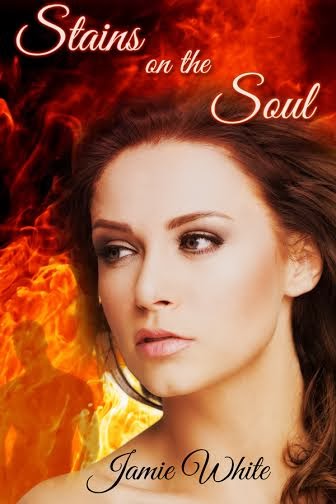
Stains on the Soul

Where you can find her: Website / Facebook / Twitter / YouTube
Top writing tip: Read as much as you can on writing, but don’t take it all too seriously. Try the advice on for size and if it doesn’t work, discard it.


Hi Jamie, thanks for taking the time to answer a few questions for us. It's great to welcome you to the blog.

Let's kick off with that makes you tick?

I’m a music addict, photo geek, pet servant and paranormal junkie who started out as a blogger and freelance writer. I was also a journalism student and am a level one Reiki practitioner.
 
Does Paganism play a part in all that?

I don’t know if I would exactly call myself a pagan, per se. I take bits and pieces from different faiths that feel right and put it all together. I first started that journal in High School after reading Christopher Pike’s Remember Me. So many things in there resonated with me and started me on a search.

So how did you get into writing? 

I would do poems and lyrics here and there and had a few short stories done, but I didn’t really start writing regularly and seriously until 2010. I started because my husband is a writer and he talked me into going to a writing group meeting at the local library. I agreed and it kind of snowballed from there.

Are you published or self published?

I’m both. I self-pubbed my first book through Create Space and recently released Stains on the Soul through Pagan Writers Press. It’s been an amazing process and I’ve learned so much from the other writers in the indie community as well as the PWP group. They are so supportive and helpful.
 
So you've published before?

Stains is my third published work. I also put a short story out in the Lyrical Muse Anthology this past August.

How did the idea for Stains come to you? 

The idea for Stains started with a dream involving magic and witches. While I have yet to write that story, it inspired an image of a girl burning as a witch that became the beginning of this book. My interest in past lives, meditation, and crystals fuelled the story as well.
 
Are dreams important to your creative process?

I have definitely gotten a bunch of story ideas from dreams.

Do you plan your stories before you begin? 

I like to have an idea of what the story will be about before I start, but I wing most of it.

Who provides encouragement and inspiration for your writing? 

My husband, CP Bialois, is a huge source of encouragement and inspiration. He pushes me to keep writing and when I’m stuck we often discuss ideas. 

Michelle Cornwell-Jordan of Indie Review Behind the Scenes has also pushed me as a writer by demanding more stories. I also have to shout out to Angie of Pagan Writers Press for doing the ThreeBooksInThreeMonths challenge and Divine Writer, because it’s been a huge source of inspiration and has pushed me to write more.

Do you get much support from your online base?

The followers on my networks and sites are some of the most amazing people. They’re supportive and always bring a smile to my face.

Would you say that you're quite a social writer?

I definitely socialize in person and online. I love getting to know other writers, and I think they form such an important support system.

Can you tell us what Stains is all about?

Stains is a New Adult paranormal story about a girl named Fiona. She’s being haunted by horrible nightmares she can’t shake that just may be a warning about this new guy she met. It delves into how much events from the past can affect a person and the importance of listening to your dreams and following your inner voice.

Do we see some of you in your book? 

Yeah, there are definitely bits of me in there, along with other people I know.

What are your future plans for writing? 

I have another holiday-themed work coming out soon and am working on several WIPs.

*

Thank you for taking the time to talk to us, Jamie. We wish you every success with your works in progress.