Monday, 6 April 2015

D.A. Roberts


Author Name: D.A. Roberts

Best Known Works: The Ragnarok Rising Saga
Where Can You Find Him?: Email, Facebook, Book Page, Blog, Website
Top Writing Tip: I would have to say, to never give up. Writing is a skill that takes work and practice to perfect. I still have a great deal to learn and I plan to never stop learning. Know your craft, study other writers and keep writing. Even if you aren't ready to publish now, it doesn't mean you won't make it. It just takes work and commitment. 


Thank you so much for taking the time to talk to us!

Tell us a little about yourself, what are the main life experiences that have led to this book?

I was born to a large family. We lived on a farm when I was young and I loved it. I remember those days with fondness, knowing it was that rural upbringing that would mold my view of the world. I've always believed in hard work and perseverance. You work hard and reap the benefits of your labor. It was also the farm that gave me my love of literature. My mother encouraged me to read, fanning the flames of my desire to write my own stories. Through the years, I continued to write but I never gave it the attention that it deserved. Despite a few minor publications, I didn't have anything significant published until I was in my early 40's. 

When did you realise that you were Pagan?

I've been walking my own path since I left the military. I began exploring alternative paths in the early 90s when I first discovered Wicca. Although Wicca turned out to be interesting and informative, it wasn't the path I was meant to follow. It wouldn't be for a number of years before I learned about Asatru. That's when I discovered that I had found the right path. I am a corrections officer with the Sheriff's Department where I live. I've been doing this for eight years. The Asatru connection fits perfectly with my job, my writing and my personality. It's a warrior's path and I love that aspect of it. 

When and why did you begin writing?

I've been writing since I was a kid. I've wanted to be a writer as long as I can remember. Although it took me years to develop the skill and discipline to complete a project that was worthy of publication, I never gave up on that dream. 

How did the topic of your books come to you? 

The idea to create a zombie series came as a conversation I had with some friends. A group of us, all officers, were having coffee one night. The topic turned to horror movies and then to zombies. When someone asked "What would we do if zombies hit here?" We all laughed, but then began discussing what we thought would happen in our hometown if the dead were to rise. I found that after the jokes were done, I couldn't quit thinking about the concept. Soon, I had a full-fledged story idea and began work on the first installment of the Ragnarok Rising Saga.

Tell us a bit about your story, key characters and plot.

My series centers around the main character, Wylie Grant. Like me, Wylie is a Corrections Officer and follower of Asatru. When the dead rise, he has to chose between his duty to his family and his oath as an officer. When things get bad, he does the best he can do. He gets his family to safety and returns to duty to help save as many people as he can. The twist in the series is how I work in the Norse references. I've had to change some of the Norse legends to fit the story, but the core is still there. The values espoused by Asatru are all there. That despite the fact that the world is ending; honor, courage, loyalty and sense of duty are still important. Maybe more important than ever before. Facing the dead will challenge more than Wylie's faith. Especially when he learns that the rising of the dead are part of Ragnarok.

Do we see some of you in your book?

I think that you see some of every writer in their books. It's impossible to create anything without putting something of yourself into it. Art, writing, food…whatever you create, you express yourself through it. It's inevitable that part of ourselves…of our personalities…would show through.

Do you ever dream about writing?

Oh, all the time. Some of my best story ideas have come from dreams. I try to keep paper and a pen handy so that I can jot down my dreams. Sometimes I get crazy ideas that might one day end up in print. Who knows? Dreams are those glimpses of our psyche that touch on our deepest thoughts and memories. What better place to inspire your creative side?

Who encourages/inspires you?

My wife is and probably always will be my muse. She encouraged me, even when I didn't believe in myself. She believed in me when no one else did. If it wasn’t for her, I wouldn't be the writer I am today. As a matter of fact, I wouldn't be the man I am without her. She's been there for me through the worst parts of my life and remained my rock and my strength. She's the mother of my sons, the rock of our family and my inspiration.

Where do you go when you need to recharge?

I like to get outdoors. Camping, hiking or just driving in the countryside. I feel drawn to the woods and rivers of my native Ozarks. I feel a deeper connection to everything around me when I can't hear the sounds of the city or the engines of cars. The wind, the water and nature play us a symphony, if we would only take the time to listen to it.

If you could go anywhere in the world, where would you most like a writing retreat?

Hmm…that's a difficult question. There are so many places that I would love to visit. I'd like to write in an old Scottish Castle, or along the shores of a remote lake in the Highlands. Scotland would be my first choice for a retreat. If I ever were to become financially able, I'd love to buy an old manor house in Scotland and live there. That would be amazing, to live among so much history. How could I be anything but inspired there? 

Is this your first published piece or have you had work published before?


I have four novels currently in release and am working on two additional projects slated for release by summer of 2015. One is the fifth installment of my Ragnarok Rising Saga and the other is the first in a new sci-fi series based on the video game The Infinite Black by Spellbook Studios. I was contacted by them to create back-story for the game and they liked my work. They then asked if I would like to create fiction, set in that universe. This book will be called The Lost Legion: Perdition's Flames. You can download and play the game for free at Spellbook.

Are you published or self published, and what has been your experience of this process? 

Although I began my career as a traditionally published author, I have found that the Independent Path was best for me. It's been a tremendous amount of work, but completely worth it. I've met some amazing people on this journey and it's taken a farm kid from rural Missouri to places I never thought I'd reach. I've learned a lot of things along the way, not the least of which was self-confidence. I know that if I put my mind to it, I can make it happen.

Do you think ebooks have changed the publishing market for better or worse?

E-books have made it easier to carry books with you. You can carry an entire library with you in a small bag. With the advent of game systems and smart phones, I feel that anything that keeps people reading the written word is a good thing. We should always take time to enjoy good stories. E-books have made it easier to publish and distribute your work on a global scale. You don't have to have a major publishing house to publish your work, now. Self-publishing is taking the industry by storm. More and more authors are learning that if they do it themselves and can handle the marketing aspect of it, then they can make far more of their own royalties than ever before. Authors no longer need a publisher to take 60 to 80 percent of the pie, just to publish their work. It has put the power back in the hands of the writer. To me, that's where it should be. The writer is the one who creates the story. Why shouldn't they reap the majority of the reward?

What are your future plans for writing?

One of my favorite writers is Cormac McCarthy. He's well into his 80's and still writing. I hope that I can still be writing books and stories when I reach that age. I have a long way to go and no intention of stopping. I plan to still be taking this journey for a long, long time.
*
Thank you again for giving us a glimpse into your passion and your process. The best of luck with your future books, stories and game tie-ins! 


Friday, 20 March 2015

Alexandra Chauran

Author Name: Alexandra Chauran
Best Known Works: How to Talk to Me After I’m Gone: Creating a Plan for Spirit Communication
Where Can You Find Her?: Website, Facebook, Twitter
Top Writing Tip: Definitely write things and finish what you start. Learn how to work even with frequent interruptions or when you’re not in the mood for writing. As a mom of two young children, I’ve had to teach myself to write under extremely distracting circumstances, and I’m thankful for that skill.


Hi Alexandra, thank you so much for taking the time to talk with us!


Tell us a little about yourself, what are the main life experiences that have led to this book?

I’ve been a fortune teller since I was a kid. It sounds strange, but really I had the most supportive parents in the world, and an intuitive mom to boot. In fact, later on, my mom and I actually worked a Psychics on the Sea cruise ship together!  I always joke that I could scry in a toothbrush. I started writing books and never stopped. Now I write at least three a year. Some book ideas come to me in dreams. Some of them are given to me by others. I’m easily inspired, and always open to suggestions!


When did you realise that you were Pagan?


I grew up as a sort of pantheist. When I was a teenager I dedicated myself to Paganism, and was initiated into Wicca as a young adult.


When and why did you begin writing?


I’m going to give a shout out to my junior high school writing teacher, Sue Moroz. She died of breast cancer, but before she did, she made me promise to keep writing!


How did the topic of your book(s) come to you?

I mostly write about my day job, fortune telling. I also love to write about magic, spirit communication, and Wicca. Occasionally a fiction manuscript jumps out of me and wanders around my house begging to see the light of day.

Tell us a bit about your story, key characters and plot.

I mostly write non-fiction books about body, mind and spirit. Though I did write a romance novel called Horned Hunter of the Night which features a young woman falling in love with the Horned God of the Wicca.

Do you ever dream about writing?

I had a dream about living my spirit life.  When I saw my book, How to Talk to Me After I’m Gone in the dream, I immediately told my publisher.  I received a positive response on 12/12/12 and signed the contract in about a month, which is lightning speed in the publishing industry, let me tell you.  My editor observed that this book must be good therapy for me, and it was. 

Do we see some of you in your book?

I pretty much pour my soul out in personal stories in all my non-fiction books. And you can literally see me on the cover of How to Talk to Me After I’m Gone, along with my mother and daughter. Technically my son is pictured too, but he was inside my big pregnant belly in that photo. People always ask if those are my hands on the cover of Crystal Ball Reading for Beginners. They’re not. They belong to a model selected by the fabulous art department at Llewellyn Worldwide, although plenty of hands familiar to me appear inside Palmistry Every Day. 

Who encourages/inspires you?

My mom is definitely my biggest supporter and encourager. I’ll let you in on a little secret that she’s my first and best proof reader. My husband and kids are amazing supporters of my zany writing addiction. And, of course, my editor at Llewellyn, Amy Glaser, is a peach!

Tell us a little about the community you’re building through your blog and social media.

Well, I already mentioned that I’m easily inspired, so I often ask my readers through my blog social media for ideas when I’m pitching new books or writing up outlines for proposals. I also give away a lot of audiobook download codes on social media. In general though, I’m woefully bad at self-promotion. The good news is that I’m not a spammer!  You can find me on Twitter, Facebook and Linkedin and blogging at Earthshod.

Do you socialise with other writers or are you a solitary author?

I’ve joined Pagan Writers Community, haven’t I? Doesn’t that count as socialization? Seriously, though, I also am a member of the Pacific Northwest Writers Association. I’m planning to get together with other writers to write more once my small children are old enough to not cause someone concentrating to have an aneurism.

If you could pick one book you wish you’d written, what would it be?

I definitely have a lot of Wicca book ideas in my head that are just begging for the right publisher to decide they’re marketable. I’d love to write a book about my tradition of British Traditional Wicca, Kingstone, while its founding elders are still alive and kicking to help me with the history. I’d also like to write a Wicca book that throws away all the tools that are barriers to folks practicing on a budget or in limited environments like hospitals, prisons, and homes filled with jumpy parents or roommates. I also think there needs to be more books written for Wiccan couples, since it’s a religion often given to practicing in loving pairs.

Is this your first published piece or have you had work published before?

I’ve had over a dozen books published.

Are you published or self published, and what has been your experience of this process?           

I am lucky enough to be a multi-published author. I’ve had a really excellent experience working with several publishers. I really can’t rave enough about working with a good publisher. I’m just not good enough to self-publish. I need teams of editors and marketers and an art department to make magic!  I’ve had wonderful experience publishing with Llewellyn Worldwide. I’ve also had different but equally charming experiences working with smaller indie presses like Jupiter Gardens Press, Pagan Writers Press, and Megalithica Books.

What are your future plans for writing?

Well, my book Clearing Clutter releases on July 8th, so I’m excited about that one being released in time for people to clean house for summer guests. I also have 365 Ways to Strengthen Your Spirituality coming out November 8th. I’m writing two more contracted books right now for 2016: Compassion is the Key to Everything and Runes for Beginners, so I’m super pumped about those topics right now.
*

Thank you, Alexandra, for sharing your process and your passion with us! The best of luck with your new releases this year and all your future projects!


Wednesday, 18 March 2015

C.S. MacCath

Author Name: C.S. MacCath
Forthcoming Work: Grandmother Mælkevejen's Belly: A Novelette of the Lodhuven
Where Can You Find Her? : Website
Top Writing Tip: Never, never, never give up. It's simple advice, but I believe it's both the hardest and most important thing a writer can do for her career.


Hi C.S., thank you so much for taking the time to talk to us!


When and why did you begin writing?

I began writing science fiction in the 5th grade when my class was assigned a creative writing project, and I never looked back. In fact, my 6th grade teacher separated me from the rest of the class for sharing my stories and poems and forced me to sit beside her because she felt I was a distraction to other students. A better case for home-schooling I never did see.

When did you realise that you were Pagan?

When I was a girl, I had the experience so many Pagans report of a deep connection with the natural world, but I didn't have the language for that connection then that I do now. In my mid-teens, I was introduced to The Spiral Dance and The Mists of Avalon. The first book gave me that language, and the second gave me a vision of spirituality tied to the Earth, the divine feminine and my own body, mind and spirit. That's when I began using words like 'Pagan', 'priestess' and 'witch' to describe myself. My words are a little different now (Druid and Heathen, most notably), but my core spirituality is still tied to that connection with the land, sea and sky.

How do the topics of your stories come to you? 


They come from everywhere! Science articles, other stories, conversations with my husband and friends, spiritual experiences, dreams. In fact, my story "Sing the Crumbling City" is the retelling of a dream I had some years ago. It's featured at Mythic Delirium during the month of April 2015, and you can read it there free of charge (though I encourage you to subscribe to the magazine if you like good speculative fiction and poetry).

What are the main life experiences that have led to this story?

The original draft of "Grandmother Mælkevejen's Belly" was written during the final week of the Clarion Science Fiction & Fantasy Writers' Workshop in 2006, an infamous year for the course by any estimation and an experience I wouldn't repeat for my weight in gold or chocolate. The second draft came a few years later as a sequel to a story that appeared in Murky Depths Issue #7 entitled "The Longest Road in the Universe." That story is still available, but you don't need to read it to enjoy this one. 

I was playing djembe in a West African performance ensemble during the writing of that second draft and thinking about the often-contentious relationship between spirituality and science. I wanted to write a story about a strong spiritual community and a strong scientific community in need of each other to solve a hard problem. So I created a group of drummers and dancers who made out-of-body excursions into a supermassive black hole, interviewed a couple of friendly physicists to make certain the science in my fiction was plausible and expanded my original short story from Clarion into a longer piece. 

Tell us about your story, key characters and plot.

The Lodhuven are a sub-species of humanity genetically-altered for various reasons, most notably to enslave them. This enslavement is generational and manifests as a Lodhuven addiction to their masters. In "Grandmother Mælkevejen's Belly," the descendants of these slaves, who have long since broken this addiction at great cost, are seeking a way to repair the devastating damage to their genome and become fully human again. 

The scientific community has at its disposal a string engine (think Hadron Collider) of massive proportions left behind by the slavers when they disappeared five hundred years ago. Banthren Kavid is the science director of this string engine; a man who believes the best way to repair the human genome is to bring the engine online and use it for that purpose. 

However, a group of drummers and dancers called the Bodh Speakers stand in opposition to the scientific community. They believe there are two vessels full of healthy human beings trapped in the event horizon of the supermassive black hole the string engine orbits. Gryph is the lead drummer of this group, which uses an entheogen to induce out-of-body shamanic journeys into the supermassive in search of these vessels. They believe the best way to repair the human genome is to rescue these people somehow and make use of their genetic samples. But if the Yost String Engine comes online, the vessels and their precious cargo will quickly be destroyed. 

When Aris, lead dancer for the Bodh Speakers, deliberately steers her own vessel down into the supermassive in solidarity with the people she thinks are trapped there, the scientific community and the Bodh Speakers come to blows.

What, or who, do you enjoy reading?

Science fiction, fantasy, comics, scientific non-fiction, spiritual non-fiction, animal rights non-fiction and anything else that strikes me as interesting. My Kindle presently contains books by Garth Nix, Peter Watts, Alaya Dawn Johnson, Dion Fortune, Nicholas R. Mann, H.R. Ellis Davidson, John Michael Greer, James Gleick and people like them. I'll read anything Lois McMaster Bujold writes. Not kidding. Pass me her grocery list.

If you could go anywhere in the world, where would you most like a writing retreat?

Siberia. It's where my next novel is set, so I'd love to spend some time there. 

If you could pick one book you wish you’d written, what would it be?

American Gods, by Neil Gaiman. Hands down. What a novel.

Who encourages/inspires you?

My husband Sean, who is my anchor, cheerleader and patron of the arts. My friends, who understand that what I do is a career and treat it like work. My fellow writers, who never give up on their own craft. My readers, who 'get' my writing in ways not even I do sometimes.

Are you published or self published, and what has been your experience of this process? 

I'm a hybrid writer, which means that I'm both traditionally-published and self-published. On the traditional publishing front, I've had some success selling my short stories and poems to semi-pro and pro markets (semi-pro and pro are pay categories and not statements about the quality of a given publication). I've completed the first novel in a series and shopped it out to agents and publishers with some expressions of interest but no offers of purchase, so I'm revisiting the beginning of that series at a different point in the universe's timeline with another book I'll begin drafting in April 2015. 

The traditional publishing market is extremely competitive right now for both long and short fiction, which makes self-publishing attractive to many writers, myself included. But while self-publishing provides a ready platform for publication, fewer people are actually reading, and fewer still are attracted to independent work for a variety of reasons. So I'm not inclined to pursue a career as a solely independent writer. I think my career benefits from the attention my traditionally-published work receives, while self-publishing provides me with an additional outlet for work readers might be interested in.

What are your future plans for writing?

As I mentioned, I'll begin drafting a new novel in April. I'm also writing for an ongoing anthology series based on the letters of the alphabet, edited by Rhonda Parrish. A is for Apocalypse is already in print and contains my Pushcart-nominated short story "N is for Nanomachine," and B is for Broken is forthcoming with my novelette "C is for Change." I'll be writing stories for the "C" and "D" anthologies this year. I'm also planning to write a one-act Pagan, science fiction play for possible local production via a Pagan friend and actor. In the meantime, I'm working on the production of an audio version of "Grandmother Mælkevejen's Belly", which I hope to release through Amazon/Audible soon.

On that note, here's a blast from the past as well. I recently completed a bit of practice recording using poetry and stories from my first collection, The Ruin of Beltany Ring: A Collection of Pagan Poems and Tales. This practice work is freely available via SoundCloud, and you can buy the collection itself in either paperback or Kindle from Amazon.
*
Thank you again for giving us a glimpse into your passion and your process, C. S. We wish you all the best with your stories, novelette and novels!


Wednesday, 4 March 2015

LFA Turppa

Author: LFA Turppa
Best Known Works: The Raven Chronicles
Where Can You Find Her? : Facebook and Amazon and Blog
Top Writing Tip: Don't  listen to critics, or even the rejection letters (but definitely keep them, and let them push you forward!). You cannot judge your own worth or talent from the traditional standards of writing or publishing, and I truly feel this is why self-publishing and independent publishing were created. So that those of us with stories are worth telling, can tell them.

Thank you for taking the time to talk to us!

Tell us a little about yourself, what are the main life experiences that have led to this book?  

Honestly, I just sat down one day and began writing, and before I knew it, it was a trilogy. I love the idea of adult fairy tales- the PG 13, edging on R, kind.

When did you realise that you were Pagan?    

I was exposed to several denominations of Christianity in my life, and as I got older, I started wondering why I was Christian when I didn’t entirely relate to it. I learned a lot about paganism through fiction, and I think that got me interested in the real live version. As I learned, I realized that this was where I felt comfortable.

When and why did you begin writing?  

I have been writing for almost as long as I can remember- even when I was little I had written a story “Journey into the Oesophagus’ or something to that effect. I read and wrote in order to escape- as most people, I suppose. But I certainly felt I had more to escape from. And to this day, one of the main reasons I write is so that others like me can escape a horrific reality. Or, to escape just for fun.

Is this your first published piece or have you had work published before? 

I have short stories and poems that have been published in the past, as well as said ‘self-publishing’ company. In terms of what I have personally put out there? I have published 9 novels, and they are all available in Kindle edition and paperback.

How did the topic of your book(s) come to you? 

I almost wish I could say something cool like ‘It came to me in a dream’, or a vision or something like that, but in reality, I just got bored one day and started writing about this girl who’d lost her magick.

Tell us a bit about your story, key characters and plot. 

The story is about a mage named Lisyra who has lost all of her magick, and begins to get physically ill because of it. As she weighs her options, and realizes that not even the healer of neighbouring town Prist can help her, she decides the best thing to do is take a journey to find a cure. She comes upon several likeable characters, including the Whisky-Maker, Darh, a Dwarf named Durgrim, and, most surprising of all, a raven, whose name and importance she does not learn until later in the Trilogy.

In these travels, she learns that she is more important than any simple mage ought to be, and has to find the strength to survive. This means fighting against the sickness inside, and an evil she cannot name.

Do we see some of you in your book? 

I think my humour comes across- I like to sprinkle my weirdness here and there.

How long does it take you to write a book, are you a fast writer or a slow writer?

Fast, I suppose. If my muse is with me, I can write a book within six months.

Do you plan your stories before you begin? 

Somewhat; I hoard index cards and do research, depending on my topic. I like to include historical facts when writing in a non-fantasy world genre.

Do you ever suffer from writer’s block and, if so, how do you overcome it? 

I do, and any writer who says they don’t is lying! I usually overcome it by taking a little bit of time to crochet or draw; maybe watch a movie. Sometimes we just need a breather to get the juices going again. I am a firm believer that my stories write themselves, and I am honoured to be their vessel.

Who encourages and inspires you? 

My fiancé, for one. He has been one of my biggest cheerleaders. I also have a pretty small internet fan base, and they have been pretty loyal and that helps a lot! What drives me, in general, is the feeling that I get inside, like my heart is swelling a thousand times its size, when I think about writing. It’s a passion, and I feel that it doesn’t really matter if I don’t write like Dean Koontz or Mercedes Lackey (though I adore them both), because it’s what I love to do, and if I didn’t do it, I feel like a part of me would die.

If you could pick one book you wish you’d written, what would it be? 

Definitely The Hunger Games. 

Are you published or self published, and what has been your experience of this process?

I had a horrible experience with one of those self-publishing companies, but I am taking it in stride. Eventually I hope to buy my rights back and use my current mode of publication to re-release. I now self-publish through Amazon, and it’s wonderful. I have full creative control- the only thing I have a problem with is editing! I don’t believe I edit in the traditional way, you know, at the end of the story? I tend to edit as I go along.

What are your future plans for writing? 

To do so until I die. A little macabre, I know.


*

Thank you again for sharing your process and your passion with us! We wish you the best of luck with your future novels and stories!


Saturday, 28 February 2015

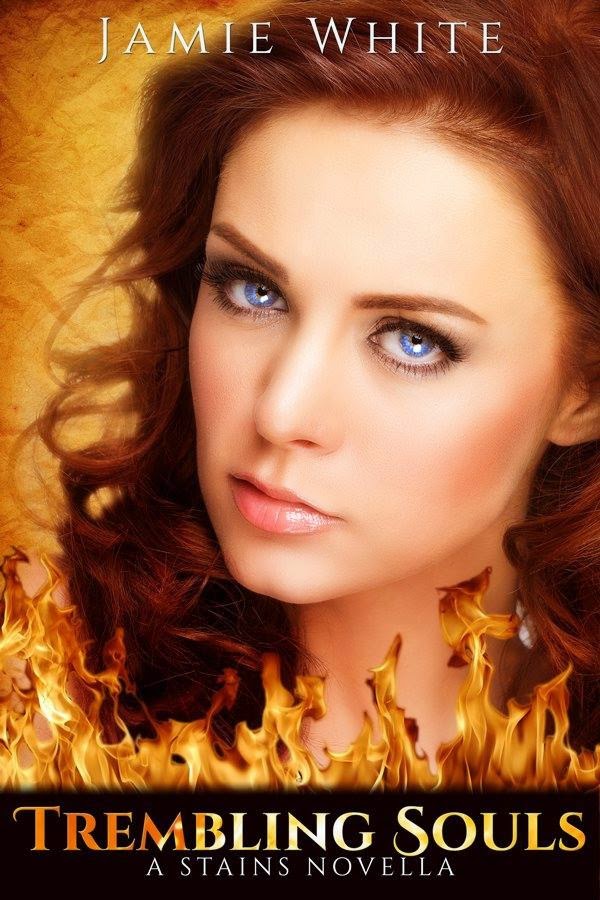
Jamie White

Author: Jamie White
Best Known Works: Trembling Souls: A Stains Novella
Where can you find her?: Twitter and Instagram  and Pintrest and Website 
Top Writing Tip: Write because you love it, not because you want to get rich. Most likely, you will end up disappointed and uninspired. Also, write what you truly love.


Hi Jamie, thank you for taking the time to talk to us!

Tell us a little about yourself, what are the main life experiences that have led to this book?

I’m a blogger, author, pet servant, and paranormal junkie. I’ve always had an interest in the paranormal, so I’ve gravitated toward a lot of New Age things, which play a big part in the Stains trilogy.

How did the topic of your book(s) come to you?

It came mostly from a dream that inspired an image of a girl burning at the stake. I started with that image and it flowed from there. By the time I was done, I ended up adding in a little of my experiences with prophetic dreams and other New Age things.

What, or who, do you enjoy reading? 

I really love Christopher Pike books. He’s a huge inspiration to me and actually helped start me on my spiritual path. I also love Laura Deluca, Michelle Cornwell-Jordan, Marni Mann, and Eric Swett. Mostly, I like paranormal stories although I also read erotica, non-fiction, and other stuff. 

Tell us a bit about your story, key characters and plot.

The key character of Stains is Fiona Stevens. Her journey begins with a dream that she begins to think may be a warning of the new guy in town who has been showing an interest in her. She’s attracted to him, but she’s scared of him at the same time. As the stories continue, Fiona begins to learn that her dreams are dealing with previous lives. Certain themes and dangers are returning to complicate this life. Now, she has to work to break free of the cycle she’s been caught in.

How long does it take you to write a book? Are you a fast writer or a slow writer?

I have written the majority of my work during NaNoWriMo challenges, but I also write short stories and other things outside of that. So, I usually write the draft in a month. After that, I like to take time to let the work sit before I get back to it. Once I start revisions, it depends. The Stains trilogy took several re-writes over months before I ended up submitting them.

Where do you go when you need to recharge?

I love getting out in nature, taking walks, meditating, and listening to music.

If you could go anywhere in the world, where would you most like a writing retreat?

Hmm. Somewhere quiet, for sure. Either a lake or ocean setting.

Has your style changed over the past five years – how and why?

I think the biggest change has been in fleshing out the work more. I worked on the emotional and scene-setting aspect a lot during the editing of the first Stains book and it’s stuck with me. Now, I have to keep myself in check to avoid going too far.

Are you published or self published, and what has been your experience of this process?

I’m both.  I am planning to self-publish at some point this year as well as my PWP releases. I think the experience with the publisher has been a great one, because it’s a community that supports you. You get a lot of support on the editing end and cover design, which is something you are on your own with when Self-pubbing. Self-pub is great because it gives you complete control over release dates and other aspects. I’m lucky, though, that my publisher has been so collaborative with covers and editorial decisions. 

Do you think ebooks have changed the publishing market for better or worse?

I think it’s definitely been a good change. People like to say “anyone can publish a book now” like it’s a bad thing sometimes, but I welcome it. We need as many stories and ideas to choose from as possible. Not everything will be great, but every story will touch someone and I like people have the freedom to put those ideas out there without someone saying they can first.

What are your future plans for writing?


I have two anthology pieces contracted, have submitted to a third and will be working on pieces for two more. They are mostly in the paranormal/New Age genre. I’m also working on preparing a Full length work for submission.

*

Jamie, thank you for sharing your process and your passion with us! The best of luck with your short stories and future novels!


Wednesday, 25 February 2015

Pegi Eyers

Author: Pegi Eyers
Best Known Works: Ancient Spirit Rising: Reclaiming Your Roots & Restoring Earth Community
Where Can You Find Her? :Stone Circle Press and Facebook
Top Writing Tip: My recommendation for new writers is to pay attention to your backstory, and do your research.  The best fiction is solidly grounded in either an extremely plausible fantasy world, or grounded in solid reality if the setting is in historical or contemporary times.

Hi Pegi, thank you so much for taking the time to talk to us!

What are the experiences that led you to write this book?


I am lucky to be living in a part of Canada where there is a strong First Nations presence, with sacred sites, thriving communities, an Indigenous Studies department at the local university, and other cultural markers, caring circles, activism and activities.  For many years now I have noticed that finding our own Pagan (or neo-indigenous) identity as non-native folks on Turtle Island has been somewhat of a convoluted process, with errors being made such as cultural appropriation and cultural insensitivity. There are some commonalities with Turtle Island First Nations in the resurgence of our Pagan lifeways, but for the most part our cultural recovery is completely different.  First Nations wisdom keepers have been my teachers, and it is the political and spiritual themes  most important to our native/non-native relationship that have prompted me to examine the ideas in this book.


When did you realize that you were Pagan?

I have always been a “flower child” (LOL) and luckily did not have much in the way of Christian conditioning to overcome in the pursuit of my love for nature.  I have been engaged with self-rewilding since my late teens, and have had many animistic and eco-mystic experiences at sacred sites and other natural places.  I love sacred geometry, constructing and walking labyrinths, communicating with the other-than-human world, wildcrafting, gardening, Goddess Spirituality, and exploring the Earth Mysteries. It is the earth-honouring aspects of contemporary Paganism that I am drawn to, plus the Celtic Reconstructionist process of recovering spiritual and cultural traditions from my ancestral Scottish and English roots.

When and why did you begin writing?

At age six I became an avid reader (!) and since then have always written poetry, short stories, journals and altered books, with longer articles and book reviews for community publications and BBI Media in recent years.  I stepped up my writing practice in a huge way about eight years ago when I started writing Goddess Tales, and then began work on Ancient Spirit Rising. 

How did the topic of the book come to you?

I noticed that there were aspects in the interface between First Nations and the Settler Society that people were not talking about, and I wanted to explore those themes in my own life and the wider society.  Where have we been finding our identity as Pagans? How do we re-indigenize ourselves to the land, to be Pagan or Celtic Revivalist without “leaning in” to First Nations?  I start off with an examination of cultural appropriation, move quickly into all that we can be doing in solidarity to assist First Nations with their social justice work, and finally, how to reclaim our essential eco-selves, rejuvenate our love for the land, practice holistic principles for sustainable living,  and bond with the places we call home.

Is this your first published piece or have you had work published before?

This is my first full-length book, but I have had articles, poetry and artwork published in magazines and books, and have scholarly essays published in a number of anthologies.

Do you ever suffer from writer’s block and, if so, how do you overcome it?

I think the non-fiction process is much easier, as there is no shortage of research material to provoke and stimulate one’s own critical thinking process.  Writing fiction engages more of the imaginative abilities, and seeking out images, textures or ancient narratives work for me as a way to get the story moving.    I don’t actually experience writer’s block, but when I’ve reached my limit on analysis or whatever it is I’m writing about, I go work on my bibliography!  I should have been a librarian.

Who encourages and inspires you?

In the Pagan world I am inspired by Starhawk, who blends social activism and spirituality so effortlessly, by the books and music of UK-based Carolyn Hillyer and Nigel Shaw of Seventh Wave, and by the work of Montague Whitsel in contemporary Celtic Spirituality. 
I am also informed and inspired by a wide range of authors and activists in animism, eco-psychology, eco-feminism, social justice and apocalypse studies; as well as many brilliant First Nations academics, intellectuals, activists, change-makers, artists and visionaries.

 If you could go anywhere in the world, where would you most like a writing retreat?

Definitely a complete tour of the sacred sites of England and Scotland, taking the same trails the ancients took, sketching the stone circles, creating impromptu rituals, writing next to hedgerows, sacred wells, under the Fortingall Yew or in pubs, and staying in little B&B’s along the way!

If you could choose any era to live in, what would it be?

I would love to live at the time of the pinnacle of Stonehenge (and environs) culture and achievement - I really want to know who built the megalith circles, what relationships they had with the other-than-human world,  and what their sacred practices were!

Are you published or self-published, and what has been your experience of this process?
          
In the interest of releasing material quickly into the world, I have embraced self-publishing.  I love the fact that I can have my own publishing imprint, and that I have total control over the final editing and design. The only down side I can see to self-publishing is the marketing support and distribution network that a major publisher provides, but I’m willing to take on those aspects as well.

Do you think ebooks have changed the publishing market for better or worse?

E-books are part of the seismic shift to digitization in all aspects of the publishing world, and the pace of change in this industry has been unbelievable!  There are many of us who actually remember life before the internet, can you imagine?  The connectivity, access and immediacy of e-books is marvellous, but I wonder if at some point in the future we will miss the more leisurely intimate relationship we used to have with the written word.  I am somewhat of a Luddite, and am happy to see that published books are still keeping pace with e-books (for now).   Spending hours and hours each day multitasking at a glowing screen has been completely normalized, but how is this “continuous partial attention” changing human behaviour?

Tell us a little about the community you’re building through your blog and social media.

My book and social media offerings appeal to those on the path of Earth Spirituality and seekers of the Old Ways in Pagan, Reconstructionist , Druidic, Wiccan and Goddessian practice.   People are looking for alternatives to Empire, and it is an exciting time to be involved in the conversation about authentic identity and re-indigenization for all peoples, and to embrace social activism as a necessary component of our lives today.


What are your future plans for writing?

My next project is to take up Blessings in Her: Goddess Tales where I left off a couple of years ago.  I want to highlight a magical or pivotal moment in the lives of different Wise Women, Priestesses, Matriarchs or Goddesses from history or myth in a series of short stories, each one accompanied by my original illustrations.


*

Thank you again for giving us a glimpse into your passion and your process, Pegi. We wish you all the best with your scholarly non-fiction, your short stories and your art!

Monday, 23 February 2015

Sunbow Pendragon

Author: Sunbow Pendragon
Best Known Works: The Black Knight of Avalon Chronicles, Books 1 - 7
Where You Can Find Her: Sunbow Pendragon on Amazon
Top Writing Tip:  Just keep writing, even if you think it isn't good enough to be published! It's good medicine, to exercise your imagination by being creative. Everyone likes a good story!


Hi Sunbow, thank you so much for taking the time to talk to us!


Tell us a little about yourself, what are the main life experiences that have led to this book?

I was born in the summer of 1957 in the Pacific Northwest, the middle child of five. As a result of that, I was always and continue to be somewhat inclined towards daydreaming and shyness. When I was the age of 12, I discovered the stories of Greek and Roman mythology. At 13, I discovered the tale of King Arthur and The Knights of the Round Table and fell under the spell of the legend. I would retreat to the woods behind my parents' house and play at knights and ladies, all by myself of course, until one of my older siblings was sent to fetch me back to reality and household chores.

As I entered my later teens, I continued to be fascinated by the story, especially the part concerning the relationship of Arthur, Guinevere, and Lancelot. I picked up any fantasy novel having to do with Arthur in any way. One was The Crimson Chalice, which introduced me to the fact that Arthur may have been the offshoot of Marcus Aurelius. Certainly, the great king was raised in a world influenced by Rome. I began investigating older books written about the warlord Arthur, such as Le Morte de Arthur, and how the legend might have began and been spread. As I grew older and found other sources of information concerning the legend, I became more interested in the mysteries behind the story: the tales of Merlin and the Ladies of Avalon. I wondered if they could be in any way true at all, and began investigating that aspect. This led me to many books on modern Magick, and finally I read Marian Zimmer Bradley's book, The Mists of Avalon. Her writing captivated me.

Along my way, I kept encountering the tale of the elusive Black Knight, painted in most versions as a terrifying individual who appeared at the most opportune moments to test the Knights of Camelot. The character enchanted me with his elusive nature and I was bound and determined to find out what he was all about.

In time I married, home-birthed two children and went about raising them until one night I had a most startling dream. In this dream, I was given an overview of the time of Camelot through the eyes of the Black Knight, the champion of Cerridwen. At the time, I had only a vague knowledge of the White Goddess and so was taken aback by Her dominance in the dream. When I awoke, I knew I must write down this story and so I began with pen and paper. I read the story every night to my mate when he returned from his labours of the day; every day I wrote until my fingers were sore and numb, so powerful was the impulse. Finally, I finished the first segment of the story and began the next, and onto the next. At last, some three years later, I finished the entire story and began my revisions.

Now some twenty years later, due to financial setbacks and other obstacles, the first two books in the series have been published. There are seven yet to come. I hope it speaks to you as it did to me; however, as you read, I beg you to remember that it is only a story. I make no claims to it's being a true representation of history. It is meant merely as a source of entertainment. And also, remember that the story was inspired by a very vivid dream. Who knows where dreams come from?

When did you realise that you were Pagan?

I think I always knew I was different, but I tried all throughout my childhood to conform so as to "get along" with others.

When and why did you begin writing?

I started writing in my early teens to combat loneliness. In my writing, I could create my own world, a world that made sense when the world I was living in didn't.

Are these novels your first published pieces or have you had work published before?

No, these seven books are the only ones I have published to date. I am working on a new series right now however

How did the topic of your books come to you?

In the most startlingly vivid dream I have ever experienced, a dream that lasted an entire night. In this dream, I was allowed to hear, touch, smell and see things, as if I was standing right there.

Tell us a bit about your story, key characters and plot.

My book is based on the Camelot legend, as you can tell by the title. It centres around the character of the Black Knight, who appears in the traditional tale as an evil character. In the dream he was presented as the Goddess' Champion, one who worked in the shadows to protect the people and test the Knights of Camelot on their virtues.

Do we see some of you in your book?

Perhaps some of my humour has been incorporated, but then I think there should be moments of humour even in the most serious of books.

Do you ever suffer from writer’s block and, if so, how do you overcome it?

Oh  yes, every author suffers occasionally from writer's block. I take the time and get away from my desk. I get out into my gardens and get dirty. That takes my mind off of everything except what I'm doing. After a few days or so, I find that I can get back into the rhythm and that my work flows properly.

Who encourages and inspires you?

My husband! He is my biggest fan, and if he hadn't encouraged me to start writing down the dream while it was still fresh, I don't think the books would have ever been written.

Where do you go when you need to recharge?

I like to go somewhere beautiful to recharge. I prefer the beach. There's a special place I go as often as possible for two or three days, just to let my cares slip away. It's rustic and there's no Internet, so I'm off the grid except for the pay phones. It's so healing!

Are you published or self published, and what has been your experience of this process?

I am a Kindle author now, but I went with a self-publishing firm first. It was not a pleasant experience.

Do you think e-books have changed the publishing market for better or worse?

I love being a Kindle author! Without such a medium, I would still be trying to get a publisher to take my work! I still would love to have my books printed someday, when the finances are there.

How important are reviews of your work, do you read them?

I think that reviews are very important, especially as a Kindle author! Yes, I read every one of them and try to comment on them. I think people like an engaged author.

What are your future plans for writing?

I plan to just keep writing. I have so many stories to tell running around in my head. I have at least one book of short stories to write about the Black Knight, and there are other characters in the book that have life stories to tell as well. I am also now two books into a new series, the first of which I am editing right now.


*

Sunbow, thanks again for giving us a glimpse into your passion and your process. We wish you the best of luck with your new novels and short stories!